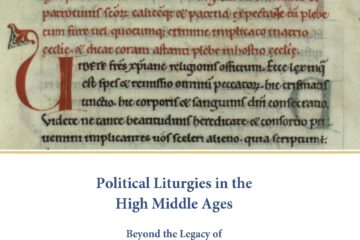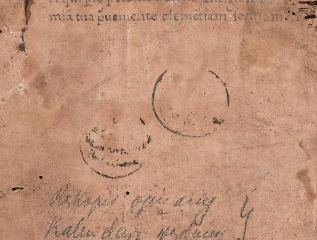


website of the project devoted to Polish liturgical manuscripts (until ca. 1300)

funded by the National Science Centre, Poland, Sonatina grant no. 2018/28/C/HS3/00464

Publications

The list of and links to the published and submitted scholarly articles with references to the manuscripts analyzed during the project.

Liturgica Poloniae Database

The searchable inventory of all the liturgical manuscripts from contemporary Poland (produced until c. 1300).

Manuscript Descriptions

More detailed descriptions of the selected most interesting liturgical codices (from Poland and abroad).

brief description of the project

Research Objectives

The goal of the project was to shed new light on the three areas crucial for Polish historiography:

1) the origins of Piasts’ early medieval state,
2) the ideology of Piasts’ political power, and 
3) the restoration of the Polish kingdom ca.1300, 
 by integrating a hitherto marginalized type of historical source–liturgical manuscripts–into the broader narrative of the political and social history of Poland from the tenth to the beginning of the fourteenth century.

The particular research objectives are rooted in my thesis that liturgy was essential in building political and social identity in medieval Poland. Moreover, without liturgy, the Piasts would not have been able to accrue the level of symbolic power that they did.

Methodology

It was necessary not only to examine liturgy as inscribed in medieval books, but also to place it within its socio-political context. In order to do so, it was necessary to undertake codicological, paleographical, artistic, and musicological analysis. The second stage compared material from Poland with other European sources in order to establish the character of a manuscript. The ultimate goal was to undertake a “thick description” of the manuscripts in as systematic manner as possible, with the usage of the anthropological reflections on rituals and symbolic power, as well as comparative liturgy. Only then was it possible to place these sources within the socio-political context of Polish medieval history.

Significance

Although Polish liturgical manuscripts have been utilized by theologians or scholars interested  particularly in religious history, this vital source has never been properly analyzed and utilized by scholars interested in political culture and other social phenomena.

However, liturgy was essential in the formation of common political and social identity in the early medieval state of Piasts. For example, through invoking the name of a secular ruler, liturgical performance articulated the identity of a community’s leader. In the fact of political instability and fluctuating borders, liturgical ritual offered a means of stabilizing the government. Moreover, liturgical prayers for secular rulers concretized the new institution of the monarchy. Texts that were performed during a ruler’s inauguration not only sacralized, but also limited the position of the newly-anointed leader, as these liturgical texts proposed concrete tasks to be fulfilled by a king. Liturgy also ushered in a newly Christian approach to ordering society. Christian worship with its rites significantly helped to build the early medieval state of Piasts.

About the project results

Need more details? Please check out the publications, database, and manuscript descriptions for more detailed information.

Blog/Talks

selected papers delivered during the project and the blog contributions

Get in touch

I am open to cooperation and happy to hear from you!
Find me at
Paweł Figurski, PhD
Institute of Art
Polish Academy of Sciences
ul. Długa 26/28
00-950 Warszawa, Poland

Contact me